
1. The basic advertorial structure
Every advertorial follows the same story arc. It earns attention with a problem the reader recognises, and only introduces the product once the reader understands why it matters.
| Step | Purpose |
|---|---|
| 1. Problem | Introduce a relatable frustration or challenge the reader recognizes. |
| 2. Why common solutions fail | Explain why typical approaches do not work long term. |
| 3. New insight | Introduce research, observation, or expert perspective. |
| 4. Solution | Present the product or routine naturally. |
| 5. Why it works | Explain practical benefits and simplicity. |
| 6. Next step | Invite readers to check availability or learn more. |
2. High-CTR advertorial headlines
These patterns read like news or research rather than an ad, which is what earns the click on native and social placements. Swap in your own niche.
| Headline pattern | Example |
|---|---|
| Researchers discover | “Researchers Say This Habit May Help With Weight Control” |
| Why most people fail | “Why Most Weight Loss Plans Fail After 30 Days” |
| Investigation | “We Tested Popular Health Supplements. One Stood Out” |
| Unexpected result | “Nutrition Researchers Were Surprised by This Daily Habit” |
| Routine framing | “The Simple Morning Routine Nutritionists Recommend” |
Testing headlines? Preview them in a sponsored-content widget with our free native ad preview tool.
3. Ideal advertorial page layout
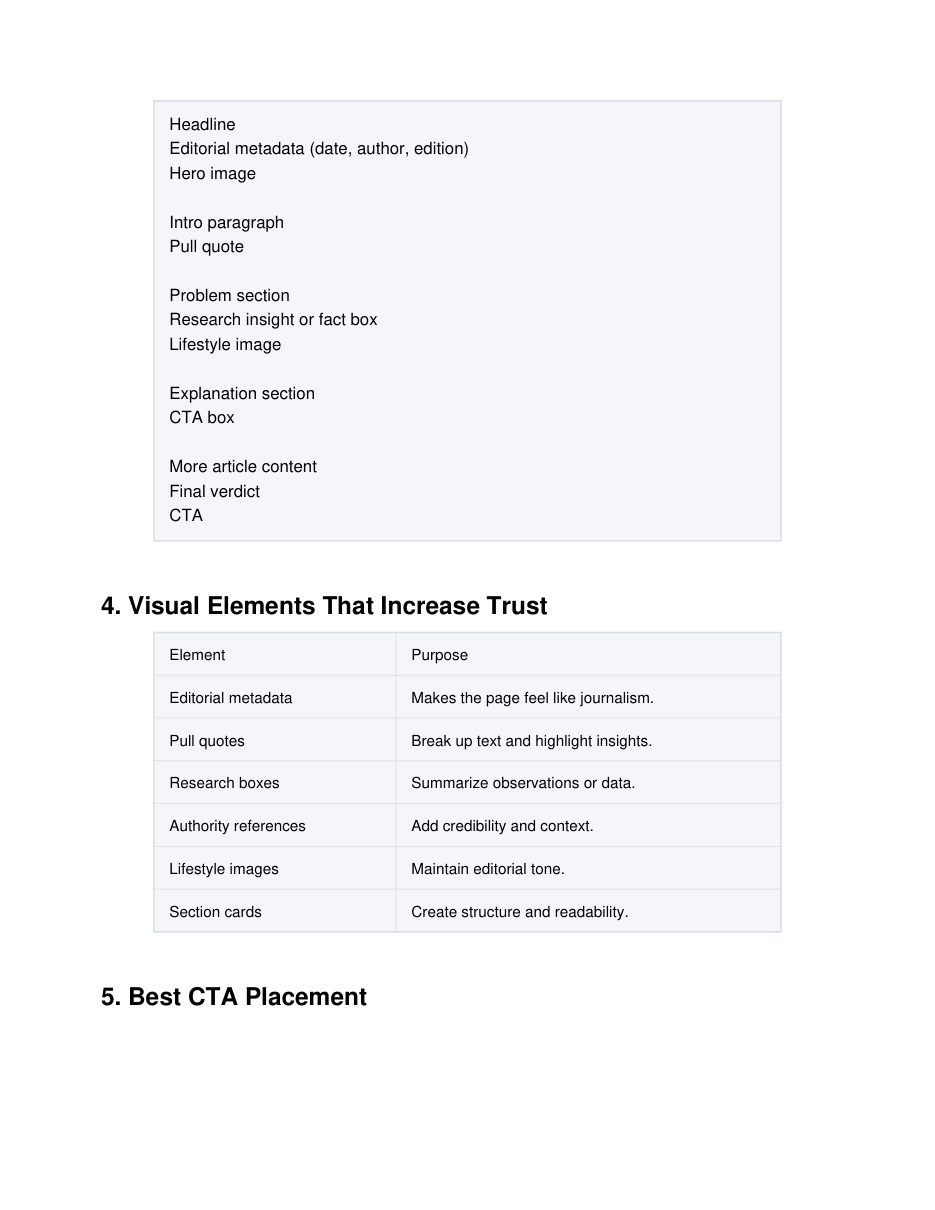
From top to bottom, the page should look like an article with the offer woven in. Notice the first CTA doesn't appear until the reader has seen the problem and the insight.
- 1Headline
- 2Editorial metadata (date, author, edition)
- 3Hero image
- 4Intro paragraph
- 5Pull quote
- 6Problem section
- 7Research insight or fact box
- 8Lifestyle image
- 9Explanation section
- 10CTA box
- 11More article content
- 12Final verdict
- 13CTA
4. Visual elements that increase trust
| Element | Purpose |
|---|---|
| Editorial metadata | Makes the page feel like journalism. |
| Pull quotes | Break up text and highlight insights. |
| Research boxes | Summarize observations or data. |
| Authority references | Add credibility and context. |
| Lifestyle images | Maintain editorial tone. |
| Section cards | Create structure and readability. |
5. Best CTA placement
Place calls to action where the reader is most convinced, not at the very top:
- Mid article, after explaining the problem
- After presenting research or insights
- Final recommendation at the end of the article
6. Advertorial writing style
- Good advertorial copy feels informative, observational, and conversational.
- Avoid aggressive marketing language.
- Readers should feel like they are reading an article, not a sales page.